


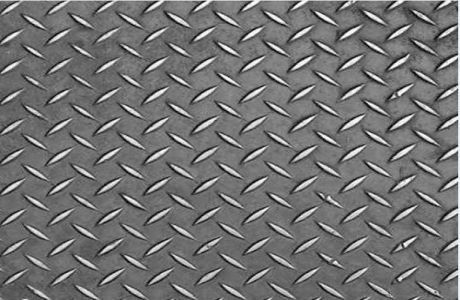
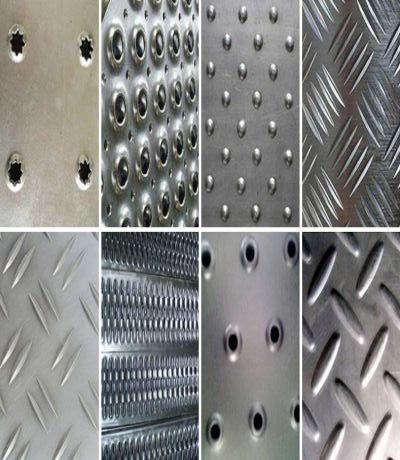
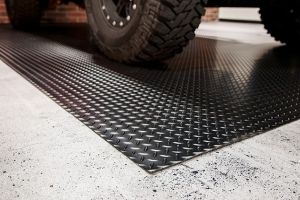
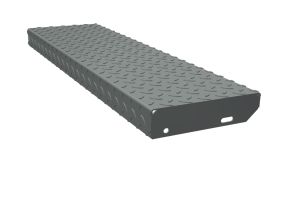
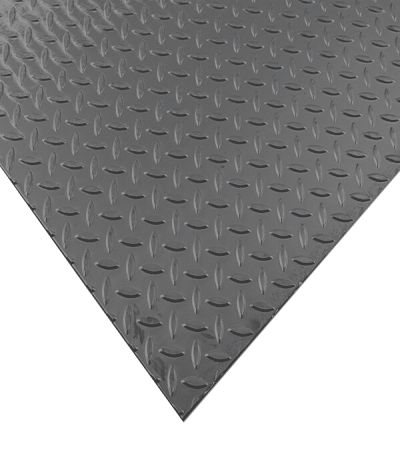
Chequered plate is also known as tread plate, embossed plate, floor plate, checker plate, or diamond plate. This type of plate has a raised surface that has different patterns in the shape of chess, diamond, lentil, almond, teardrop, with a regular pattern and in an orderly manner on it.
To make this kind of plate, one can use steel plate, stainless steel plate, aluminum plate, and galvanized plate. The method of production and the presence of ridges on the surface of the plate make it a suitable option for places where there is a possibility of slipping and sliding.
The idea of chequered plate was proposed by Henry Robinson Palmer, an English engineer. He was an engineer and architect at the London Dock Company in 1820 AD and used wrought iron to make the prototype of this kind of plate.
With the great reception of this product and the advancement of industry, changes in its structure occurred in 1890 AD and wrought iron was replaced by steel and then other materials until today that we see this product with different patterns and raw materials.
In this topic, we should mention that chequered plates can be classified based on three criteria, which are:
Based on the material and grade.
Based on the shape and appearance.
Based on the method of production.
Below we will briefly and usefully examine each of these categories. If you need more information, you can get enough and comprehensive information in the article Types of Chequered Plate and contact our sales experts.
Types of chequered plate in terms of material and grade:
In the classification of these plates based on the material and raw material used in their production, we can refer to steel, stainless steel, aluminum, galvanized types that have the most applications.
Types of chequered plate in terms of appearance:
The meaning of appearance is the shape and pattern of the ridges on the surface of the plate, which depending on the type of application and the material used, one can use different patterns in this regard, which we will introduce the most common ones below.
Chess model
Diamond model
Lentil model
Almond model
Almond model
Teardrop model
It should be noted that in the above cases, one can use single-line, double-line, or five-line patterns, which are usually designed by the experts and specialists of the company, so that the final product has the highest quality and the most efficiency and is also cost-effective for the consumer.
This product can be produced in two ways, which we will examine below:
Production by pressing method:
In this method, the desired pattern is pressed on the plate by a press machine.
Production by factory method:
In this method, the original structure of the plate remains intact and the ridges are pressed on the plate.
Difference between factory and press methods:
There are some differences in the production process by the above methods, which are:
In the press method, the back of the plate is not completely smooth, but in the factory plate, the structure of the plate does not change.
The weight of the factory plate is more than the press plate, so in terms of price, the factory plate is more expensive than the press plate.
The most and most important application and nature of production of this kind of plate is for use in slippery and frictionless places, which prevents slipping and increases the friction of people and vehicles. It should be noted that due to the presence of this feature and other characteristics, it has many applications in various industries such as shipbuilding, automotive, road construction, building construction, machine making, etc., which we will refer to some of them as follows.
Regarding the features of these plates, we can refer to very important issues that are very important in the industry, such as:
Very high resistance
Creating and increasing friction in slippery and sloping areas for people and vehicles.
Very high weldability.
It has high flexibility.
Low weight compared to similar products.
Easy transportation.
It has a bright and clear surface, of course, depending on the material used in its production.
In the discussion of calculating the price of chequered plate, there are several very important factors, which are:
Production method by pressing or factory.
Alloy and material in its production.
Plate thickness.
Type of pattern and ridge.
This product, like other steel products, has price fluctuations and to inquire about its current price, you should contact the sales experts of Ajineh Sanat Arak Company.
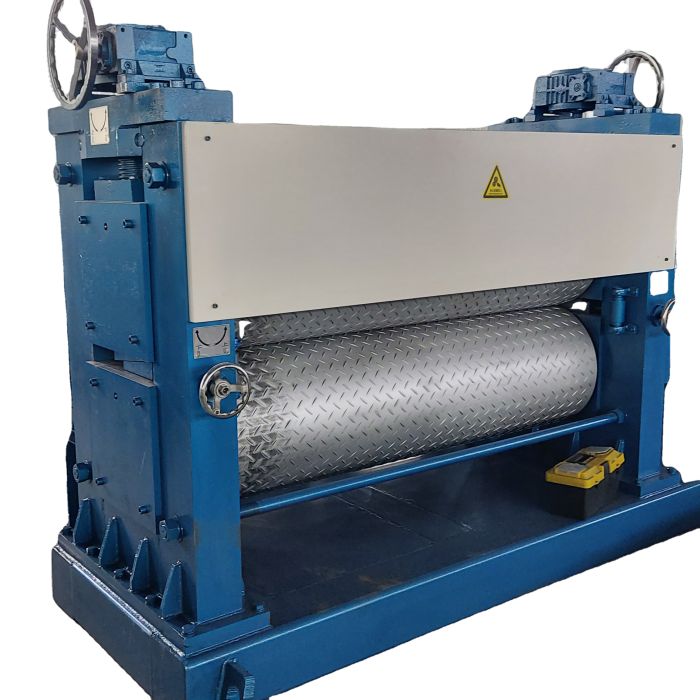
In the production of chequered plates, various methods can be used, the best and most common method of production is hot rolling.
It can be said that the production method of them is exactly similar to the production of black plate, with this difference that on one of the rollers, patterns are used to create ridges on this kind of plate. For this reason, in terms of price, it does not have a significant increase compared to its black plate of the same size and weight and is economical.
Final word:
We hope we have been able to provide you with useful information about chequered plate and related topics. If you need more information or how to buy and order this product, you can contact the company’s experts.
Thank you for your good choice, dear customers.
Some other products of Ajineh Sanat Arak Company