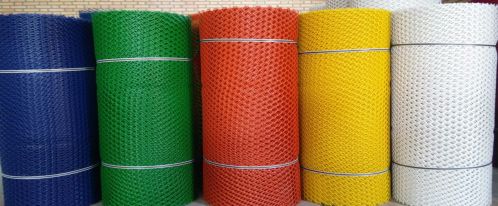
Plastic netting is another type of mesh that we will introduce in this section.
This product is used in many places due to the unique properties of plastic.
The main components of plastic netting are predominantly high-density polyethylene (HDPE), low-density polyethylene (LDPE), and linear low-density polyethylene (LLDPE).
Other materials used in the manufacture and production of these nets include masterbatch in various colors, as well as materials that provide resistance to ultraviolet (UV) solar radiation.
It is worth mentioning that the combination of these materials varies depending on the functionality and application of the desired netting, which is determined by experts and specialists using different formulas.
Today, nearly a century after the production of plastics, the industry has made remarkable progress, and plastics are manufactured in a wide variety of forms.
For example, contrary to popular belief, not all plastics disintegrate or melt in the presence of heat.
With changes in polymers and molecular structure, plastics are now produced that are highly resistant to heat and do not suffer any damage.
Given the above points, as well as prominent features such as light weight, reasonable price, moisture resistance, high flexibility, and many other characteristics, plastic nettings are used in various industries today.
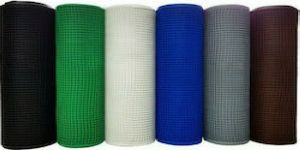
Plastic netting comes in various models, each with different applications based on the type of raw materials used in their construction and their production method.
Below, we will examine the most famous and widely used types.
In terms of mesh size, nets are divided into two categories: fine mesh and coarse mesh.
In terms of heat resistance, this product is divided into two categories: heat-resistant and non-heat-resistant.
This type of netting is very lightweight and available in various colors.
It is produced in two types, light and heavy, each with its own uses and characteristics.
Applications of this product include use in corrugated roof ceilings, kitchen utensils, laboratories, food industries, etc.
It is usually available in the market in widths of one meter and one and a half meters, but production in different widths and lengths is also possible.
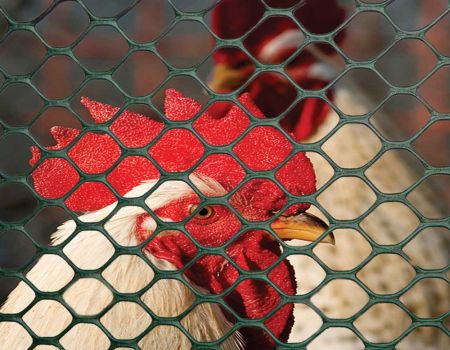
As the name suggests, this model is used as a fence.
Its most common use is for fencing around agricultural lands, villas, and gardens, as well as for containing animals.
Due to its high resistance to various weather conditions, as well as its light weight, reasonable price, and attractive color range, it has gained many fans today.
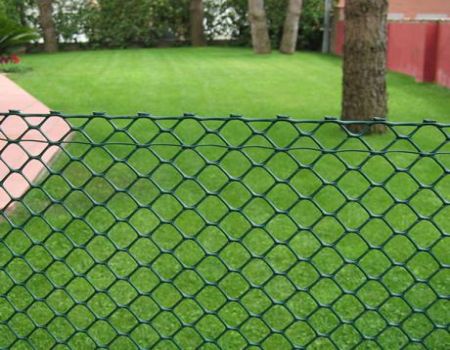
Raschel netting is the best option for packaging various agricultural products.
Products that are packaged with raschel netting include onions, potatoes, oranges, lemons, garlic, cabbage, carrots, walnuts, bell peppers, and similar items.
Cost-effectiveness, very light weight, a wide and varied range of colors, proper air ventilation, and high durability are among the advantages and features of this product.
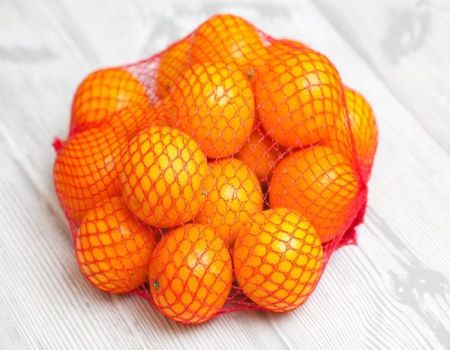
In conclusion, regarding the types of nets, it is worth noting that onion netting is not considered a separate category and falls under raschel netting, but it is commonly referred to as a separate category due to its widespread use.
This product has many features and advantages. Below, we will introduce the most important characteristics of plastic netting.
High Resistance to Water and Moisture:
Due to the properties of the raw materials used and the general characteristic of plastic against water and moisture, it has very high resistance and corrodes and wears out much slower than similar products in these conditions.
High Durability:
This product is very durable. For example, plastic fencing netting has five times the resistance compared to its wooden counterpart.
High Flexibility:
Compared to similar products, this product has much greater flexibility and malleability.
Cost-Effective:
In addition to its lower purchase price compared to similar products, due to its very long lifespan and no need for maintenance costs, it is very cost-effective.
Easy Installation:
Installing this type of netting does not require special knowledge and can be easily installed by individuals without the need for experts.
Light Weight:
Due to the raw materials used, despite its large volume, it is very lightweight.

This product has a wide variety of applications.
Below, we will introduce the most famous and widely used ones.
Reinforcing walls, ceilings, and surfaces.
Soil improvement.
Fencing.
Shade and light filtering.
Packaging of agricultural products.
Construction of various animal cages.
Insect and pest barrier.
Plastic netting for warehouse ceilings.
Plastering.
Tiling and ceramic work.
Grass cultivation.
Seedling protection.
Poultry farming.
Fisheries industry.
Greenhouses.
Road construction.
And many other applications.
What is plastic netting?
It is one of the types of netting that is made using plastic materials.
What are the types of plastic netting?
There is a wide variety, with raschel, fencing, and poultry being the most important.
What are the advantages of plastic netting?
It has many advantages such as high durability, light weight, easy installation, reasonable price, high flexibility, etc.
How to purchase and inquire about the price?
To purchase and inquire about the price of this product, contact the sales experts at Ajineh Industrial Company in Arak.
We hope to have provided you with useful information regarding plastic netting and related topics.
It is worth mentioning that Ajineh Industrial Company in Arak is currently not active in the field of plastic nettings, and the sole purpose of writing this article was to inform you about this product so that you have sufficient information for purchasing if needed.
For information about metal netting types, you can contact the sales experts at Ajineh Industrial Company in Arak.
Thank you for your companionship.