


Mesh
June 18, 2024
Galvanized Mesh
July 9, 2024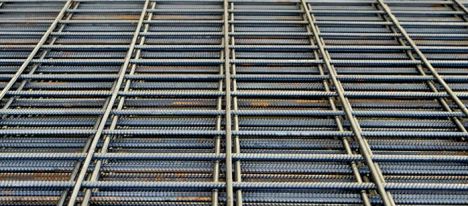
steel mesh
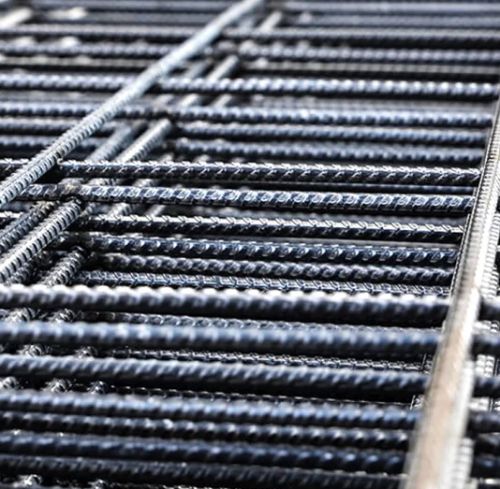
Steel mesh refers to a network of steel wires or rods, both plain and deformed, interconnected to form a grid.
This grid is arranged such that the meshes are placed transversely and longitudinally, intersecting each other, creating square-shaped openings, which are colloquially referred to as “eyes” in the mesh.
Steel mesh is primarily used in the construction of building foundations. Generally, this type of mesh is utilized to reinforce concrete in construction and substructures.
The purpose of using steel mesh in concrete slabs and building substructures is to increase the concrete’s strength, a process commonly known as reinforcing concrete.
Characteristics of steel mesh and its difference from welded wire mesh
When examining the features of this product, you will notice similarities with welded wire mesh.
Initially, the term mesh refers to a network composed of wire or thread, which it shares in common with wire mesh.
However, what differentiates the two is that wire mesh is flexible, whereas steel mesh lacks this property, which can be considered the most significant difference between them.
Wire mesh is flexible in various directions, but steel mesh, akin to a sheet of iron, can only be used in one direction.
Contrary to wire mesh, mesh cannot be used for plastering or installing mortar on walls because flexibility is a crucial factor in this application, and mesh lacks it.
Another difference is that wire mesh can be produced from sheets by cutting and stretching the sheet transversely, but steel mesh is not made from sheets.
You will learn more about the production process of mesh below.
One of the important and prominent features of this product is that it has the same coefficient of expansion as concrete.
This means that steel mesh and concrete expand and contract to the same extent with temperature changes.
This characteristic significantly enhances the structure’s strength and durability.
Production of steel mesh
Steel mesh is generally divided into two categories.
These categories include welded mesh and non-welded mesh, and as their names suggest, this classification is derived from their production methods.
You will become more familiar with these two types of mesh and their production processes below.
Welded mesh and its production process
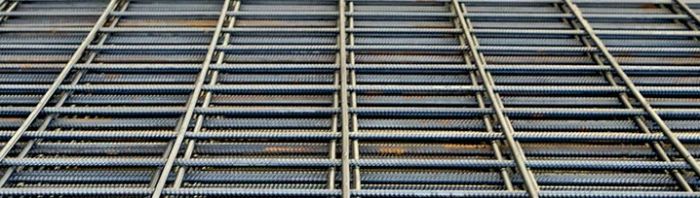
Welded steel mesh, made from deformed bars, is indeed the most common type of this product.
This type is used more frequently for concrete pouring and in excavation due to the characteristics provided by the use of deformed bars.
To produce welded mesh, deformed bars are first placed longitudinally and transversely, or horizontally and vertically, next to each other, forming right angles.
Finally, at the points where the bars intersect (essentially the corners formed by the intersection of the bars), welding is performed either manually or automatically.
It should be noted that this type of product is very popular and widely used due to its cost-effectiveness and the high and special resistance it provides in foundations.
Non-welded steel mesh and its production process
The other type of mesh is non-welded mesh, which is produced in two ways.
In the first production method, plain and deformed bars are placed next to each other and connected with wire.
In the second method of producing non-welded steel mesh, plain bars with a small diameter and low grade are woven together with steel wire.
It is important to know that woven mesh can only be produced mechanically, and its production occurs in two stages.
First, the wires for the width and length of the work are bent, and in the next stage, they are placed in a warp and weft pattern by a machine, ultimately producing the mesh.
The type of steel used in both production methods is of high importance.
Because the chemical and technical specifications of each type of bar are different, knowing these specifications helps to purchase and use the best material for the intended application of the mesh.
It is also worth mentioning that the wires used in the production process of this product come in various types.
These wires include black carbon wire, galvanized wire, and various types of steel.
Each of these wires has its own characteristics and varieties, and as mentioned earlier, each is produced and marketed for specific uses.
Advantages of using
Using this product has special advantages that may seem simple and basic at first glance.
However, paying attention to these features and applying them leads to greater efficiency for the buyers and consumers of this product.
Among these features, one can point to its very high resistance, which is due to the production shape of steel mesh with spot welds and the regularity of these weld points in the product.
Another feature is its cost-effectiveness and economical final price.
In fact, this type of mesh is cheaper than other methods used for strengthening foundations.
Another significant advantage of using steel mesh is the increased speed of use compared to other methods.
Additionally, the installation cost is reduced, and its transportation is very easy.
Applications
Now that you are familiar with the advantages of using this product, we find it necessary to mention its applications here, so you can more easily decide on purchasing and using this extraordinary product.
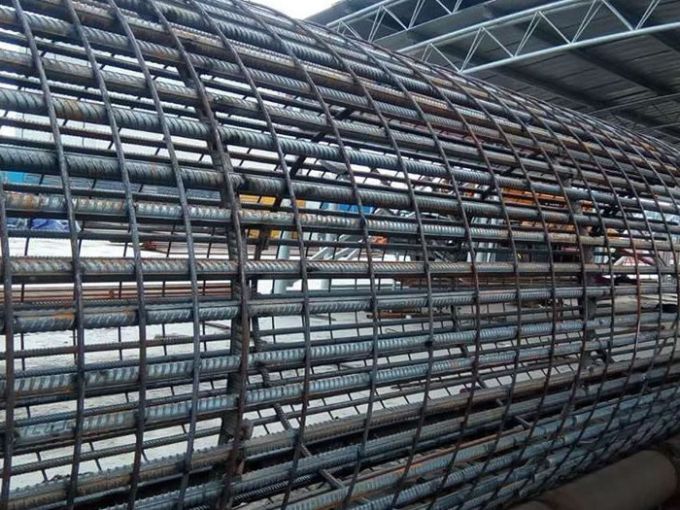
The most important application and highest use of steel mesh can be seen in strengthening concrete and its use in the foundations of structures.
Other important applications of steel mesh include the production of composite ceilings using deformed bars,
Also, the production of thermal rebar using plain bars,
And that it is used in walls and precast reinforced concrete components like sewer manholes, etc.
Other applications include:
Use in highway construction.
In the framing of New Jersey barriers.
For building warehouses.
Concrete foundations for road construction.
Creating and constructing tunnels, subways, and bridges.
Concrete dams.
Irrigation channels.
And so on.
In general, the use of this product is dedicated to a wide range of tasks and locations, and this type of mesh can be best utilized in important and special cases.
The type of bar used, and the size and dimensions of the sheet, are very important in determining the purpose and application for which this product will be used.
Price of steel mesh
As mentioned, steel mesh is mostly used to strengthen concrete in various projects, and it can be said that one of the best and most prominent materials used for reinforcing concrete is the deformed bars used in it.
In excavated areas, using steel mesh can create more resistance and strength in the foundation.
Naturally, one of the factors influencing the price of steel mesh is the type of bar used in its construction,
Because this product can be produced with a wide range of wire sizes and with both plain and deformed bars.
In a way, the price of the bar is determinant in obtaining the final price of steel mesh.
Apart from the size of the bar, the length and width of the mesh sheet and the size of the eyes of the mesh sheet also significantly affect the price of steel mesh.
Due to the daily and even momentary fluctuations in the iron and currency markets,
The prices defined for each sheet of steel mesh are variable.
Therefore, it is recommended that if necessary, purchase this product on the day you have made a final decision to buy.
Because if you do not place an order, you may face a decrease or increase in the price of steel mesh in the coming days.
For purchasing and placing orders, our colleagues in the sales department are ready to respond and provide any consultation and guidance at the contact number 08691010110.