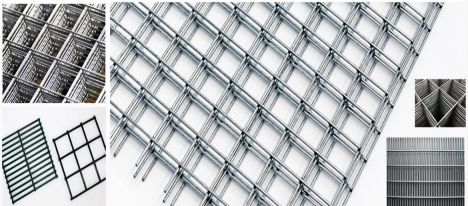
Welded wire mesh, also known as welded mesh or galvanized mesh, is a metal wire screen.
Welded mesh is primarily used for reinforcing concrete, effectively increasing its strength. The majority of its supply is intended for this purpose.
Welded wire mesh can be utilized in various applications including road construction, airport runway construction, composite roofs, dam building, shelving, precast concrete components, and railway tracks.
For each of these applications, the construction features of the wire mesh vary, and the mesh must be designed and manufactured specifically for its intended function. It is important to consider the purpose of the mesh in its application.
As mentioned, one of the most important functions of this mesh is concrete reinforcement.
Incorporating this mesh in construction strengthens the concrete structure and also enhances its tensile strength.
Welded wire mesh is also extensively used in the construction of 3D panels, as it ensures the durability and longevity of the structure while maintaining the mesh’s strength and resistance.
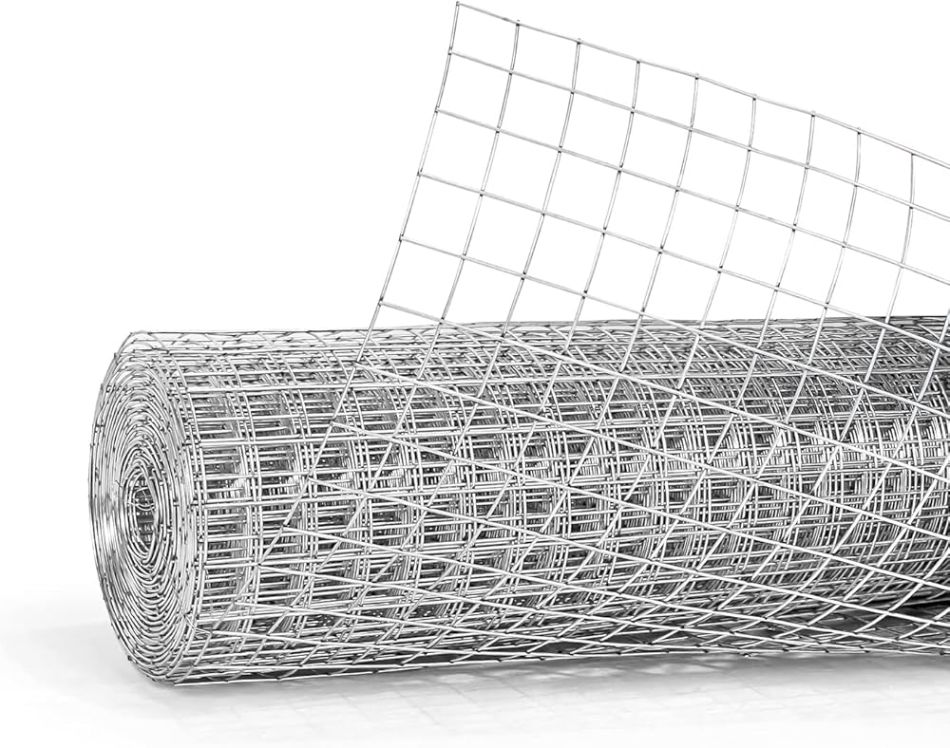
Image of welded wire mesh.
Welded wire mesh is sometimes referred to as light welded mesh due to the use of lower number and size of rods.
To produce welded mesh, rods are placed parallel in length and width and are welded at the points of intersection.
Generally, light welded mesh production uses rods or wires with a thickness between 3 to 5 millimeters that are capable of being tensioned.
The networks formed by welding the wires have eye sizes ranging from 5 to 30 centimeters, and in some cases from 8 to 40 centimeters, and can be ordered and produced in square or rectangular shapes.
Welded mesh production with both iron and galvanized rods and wires is possible.
In this type of mesh, the wires and rods are connected to each other using spot welding, and this production method is one of the factors influencing the naming of this type of mesh.
After the production stages, this product is offered in both panel and roll forms.
In the production of the roll type, wires with a thickness of 2 centimeters to 5 centimeters are used, and in the sheet or panel type, wires of 4 to 6 centimeters are offered in panel sizes of 1 to 2 meters.
The production method ensures that this product, despite its simplicity, has unique features and special advantages over other similar products.
Some of the advantages of welded wire mesh include:
• The use of this mesh is very cost-effective, and this type of mesh is also very efficient. With a small amount of welded wire mesh, a very large area of the construction site can be reinforced and utilized.
• Also, due to its form of supply, the waste of this mesh is very minimal.
• Another advantage is that wire mesh is an excellent conductor of electricity.
• Furthermore, its use increases the strength of the structure, and its application alongside materials such as concrete enhances the overall resistance of the structure.
• Another feature of welded mesh is that it is highly resistant to tension as well as pressure and heavy weight, and does not tear easily.
• Also, in the event of a fire in places where this mesh is used, ventilation occurs and the path is not blocked.
All these capabilities and features that this product provides make it one of the perennial choices for buyers to implement in civil and construction projects, ensuring the best utilization of this product.
It is worth mentioning that we have thoroughly and comprehensively reviewed the topic of welded wire mesh and all related issues in the welded mesh brochure, which you can view for more detailed and comprehensive information.
Or, if needed, you can contact the sales experts at Azhineh Sanat Arak company.