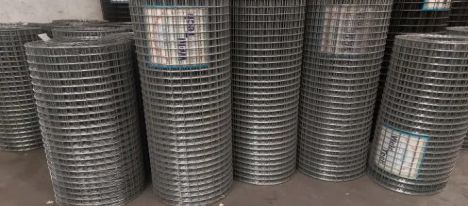
The weight of galvanized mesh is a determining factor in the pricing of this product, as it is sold by weight.
Galvanized mesh, due to its unique properties, is one of the best-selling and most widely used materials in various industries, especially in the construction and civil engineering sector.
As you may know, galvanized mesh is highly resistant to corrosion, rust, and moisture.
Additionally, due to its special structure, it lacks flexibility.
All these features combined result in a high-quality product that can alleviate many of the concerns and needs of builders and designers.
It is worth mentioning that all these production characteristics, including the shape and dimensions, directly affect the weight of the galvanized mesh.
The shape of the mesh and its volume vary depending on the size and thickness of the rebar, as well as the number and shape of the apertures.
Generally, most galvanized mesh sheets are manufactured according to standard sizes, with one of the most common dimensions being 1×2, although the weight of the galvanized mesh in this size also varies according to its production characteristics.
The variety of rebar types and sizes, ranging from size 6 to 16, allows for the production of galvanized mesh in different forms.
In general, to determine the weight of this product, the measurement unit is considered on a square meter basis, and several factors influence the final weight of the mesh.
Among these factors is the type of geometric weave formed in the mesh network.
Also, the type of rebars used in it is another factor that affects the weight of the galvanized mesh.
Furthermore, the amount of space between the rebars that form the mesh and the size of each mesh sheet are also significant factors affecting the weight of the product.
As previously stated, the size of the rebars used and the number of apertures formed in each mesh sheet not only play a crucial role in the functionality of this type of mesh but are also very important factors affecting the weight of the galvanized mesh.
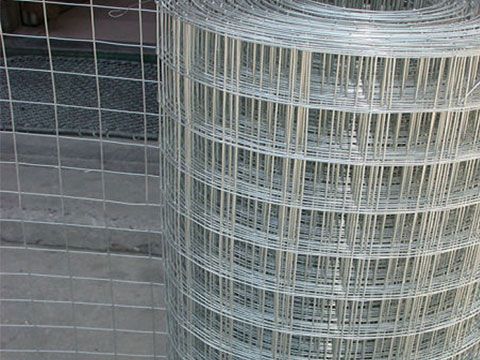
The weight of mesh generally varies between 1.5 to 18 kilograms per square meter.
In the lightest case, the weight of the product is 1.5 kilograms, which is used for making sheets of this weight with lower-grade rebars, i.e., grade 6, which are thinner.
These rebars are placed in horizontal and vertical rows next to each other, forming 30×30 centimeter apertures.
Thus, the weight of mesh in each sheet produced with these characteristics reaches 1.5 kilograms per square meter.
It is said that the weight of this product in the heaviest case is approximately 18 kilograms.
This weight is calculated in such a way that in the production of these galvanized mesh sheets, rebars with grade 12 and greater thickness (which can be used in both plain and deformed models) are used.
These rebars form 10×10 centimeter apertures by being arranged next to each other, and in this way, the total weight of each galvanized mesh sheet per square meter with these production characteristics reaches 18 kilograms.
Manufacturers can produce galvanized mesh sheets in dimensions other than the common and standard sizes upon customer request.
Given this possibility, it should be considered that the weight of this product, when produced in a specific custom size, is calculated based on the factors mentioned (such as rebar grade and number of apertures), and a fixed and specific weight cannot be assumed and declared in these cases.
For this purpose, you, dear customers, can select the specifications of the desired custom galvanized mesh weight or even standard-sized sheets and contact our colleagues at Ajineh Sanat Arak to find out the weight of the product.
They are available daily at the phone number 08691010110 to provide any services to you, our esteemed companions, and to guide you through a quality and cost-effective purchasing experience.