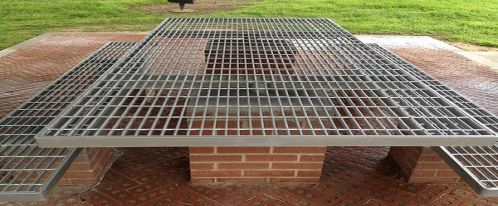
Grating is a type of structure characterized by its internal networks. It possesses a unique blend of attributes, including impressive load and force-bearing capacity coupled with a lightweight design compared to other types of structures. This combination allows for the unhindered passage of light and air, enhancing the aesthetic appeal of spaces while preventing the accumulation of industrial waste. Known for its cost-effectiveness compared to similar options, grating stands out as a preferred choice for covering channels, flooring traffic routes, and constructing industrial and civil staircases.
However, these days grating finds itself employed in diverse scenarios such as protective barriers, fencing solutions, trash racks, advertising billboards and various other urban applications.
Metal grating’s technical prowess hinges on three characteristics influencing weight and strength:
1. Height and thickness of the bearing bar
2. Dimensions of the crossbar (bar, half bar, rebar, or four-sided twist)
3. Mesh
Based on appearance, Metal grating is categorized into three main types:
1. Bar in Rebar Grating
2. Bar in Half Bar Grating
3. Bar in Bar Grating
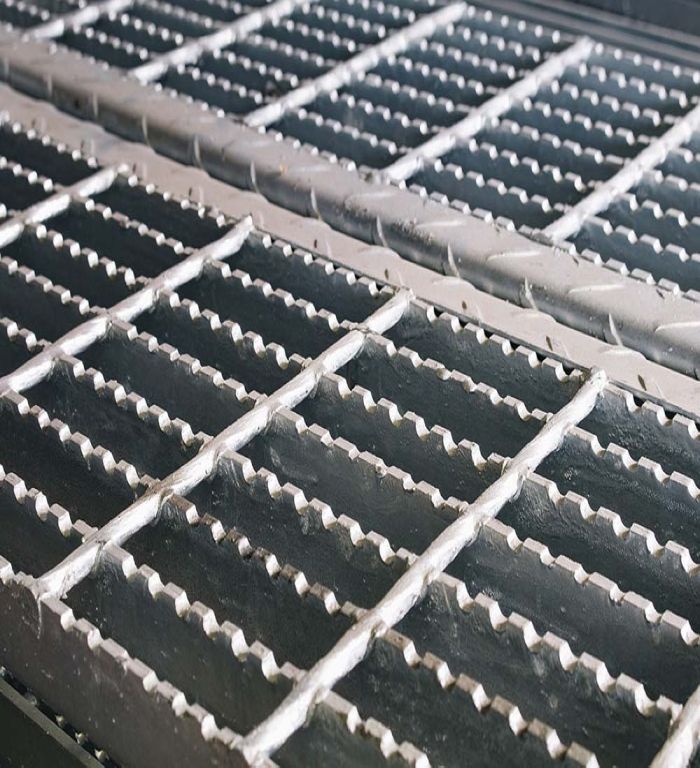
The load-bearing Component is responsible for bearing the force applied to the grating. All three categories share a load-bearing component which utilizes a bar with appropriate height and thickness.
In Bar in Rebar , ribbed rebar is Utilized as the crossbar, occasionally simple rebar is incorporated in unique cases.
The Bar in Half Bar alsi known as Bar in Bar Grating, features a cross bar that is narrower than the bearing bar, referred to as the half bar. The width of this half cross bar is limited to at most half the width of the bearing bar, maintaining the same thickness.
Consistency is maintained in the height and thickness of both the bearing bar and the grating’s crossbar in Bar in Bar .
Crucially, various meshes can be employed in the production of these gratings.